The Constitution and the Development of Social Sciences and Humanities
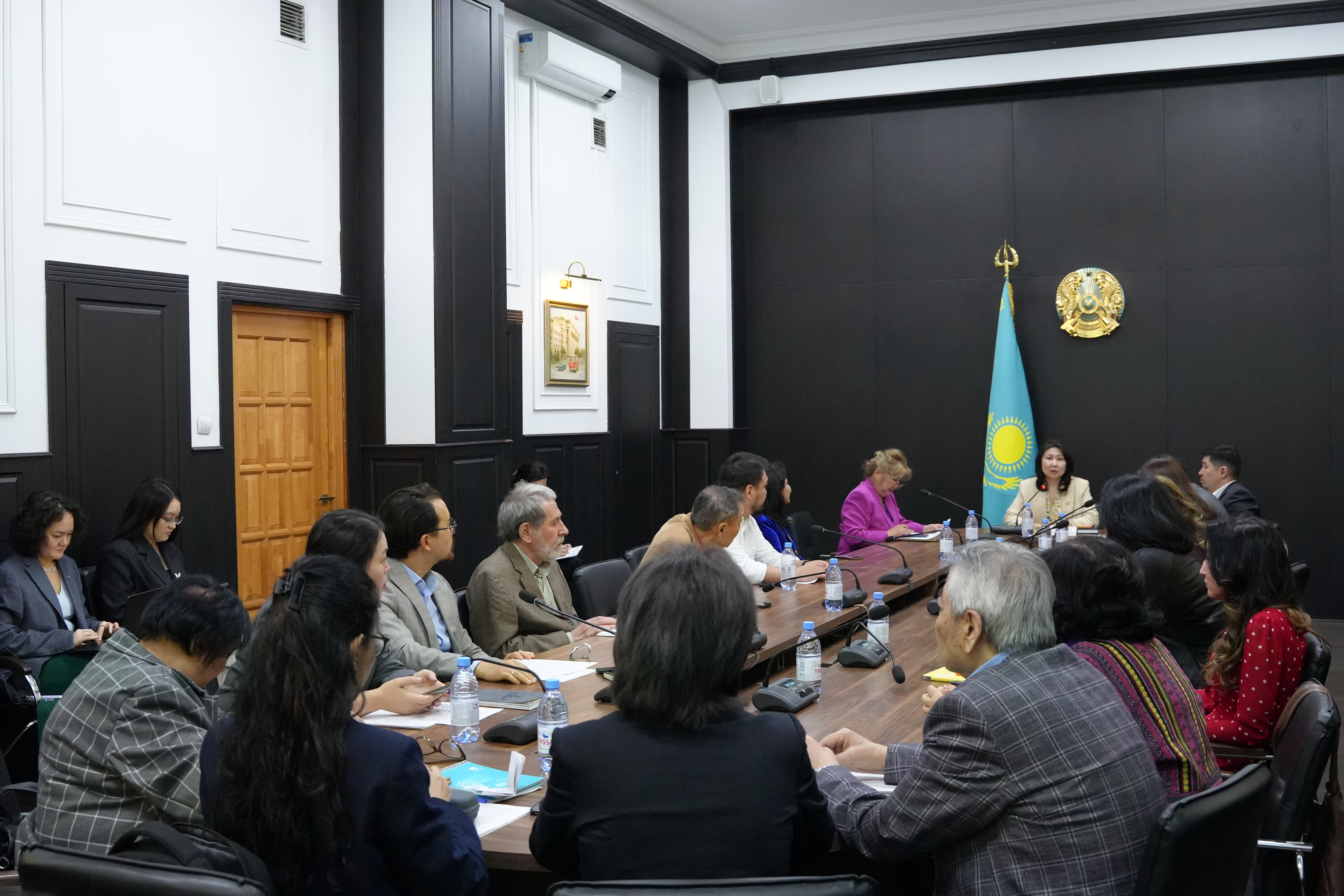
On April 8, 2026, in Almaty, a strategic session titled “Science and Society: Strategic Priorities for the Development of Social Sciences and Humanities Research” was held at the Institute for Philosophy, Political Science and Religious Studies under the Committee of Science of the Ministry of Science and Higher Education of the Republic of Kazakhstan. The session was dedicated to Kazakhstan’s Day of Science Workers and took place in the context of the new constitutional agenda, where science and innovation are закреплены as strategic priorities and considered key drivers of national development.
Opening the event, Aigul Sadvokassova, Director General of the Institute and Doctor of Sociological Sciences, noted that enshrining science among the priorities of state policy in the Constitution reflects its growing role in shaping human capital, developing a knowledge-based economy, and ensuring sustainable social development. According to her, the new constitutional framework sets a higher level of responsibility while simultaneously creating new opportunities for science as a tool for analysis, forecasting, and decision-making.
During the session, Deputy Director General for Research, Professor Sholpan Jamanbalaeva, presented the results of an analysis of program-targeted funding for social sciences and humanities research. She emphasized that the state research agenda has evolved significantly in recent years: research topics have expanded, applied and interdisciplinary approaches have strengthened, and the range of outputs has increased substantially—from academic publications to models, standards, digital platforms, and analytical systems. Today, a comprehensive system of research output is being formed, encompassing academic, applied, digital-infrastructural, and socially oriented results. Among the key priorities identified were further development of the “research–solution–implementation” chain, ensuring the accumulation of comparable data, the formation of sustainable research frameworks, and the training of specialists at the intersection of science, data, and digital technologies.
An analysis of publication activity in the international Scopus database was presented by PhD holders Zhanat Doskhozhina, Damira Sikhimbayeva, Assyltai Tasbolat, and Shyryn Tlenchiyeva. Participants noted a steady growth in publications and an expansion of research topics, indicating increased international scientific visibility and the integration of Kazakhstan’s science into the global academic space. A priority task identified was further improving the quality and scientific impact of publications, as well as expanding international collaboration and strengthening sustainable research schools.
Issues related to patent activity and international practices were addressed by Deputy Director General for Strategic Development, Yermek Toktarov. It was noted that in the social sciences and humanities, various forms of outputs are developing, including analytical systems, databases, digital platforms, and educational products. In this regard, priority tasks include the development of effective intellectual property management mechanisms, consideration of the specific nature of social sciences and humanities outputs, and the creation of conditions for their implementation and practical application.
Rustem Mustafin, Head of the Center for Digital Social Sciences, presented the evidence-based policy approach, in which scientific data, analytics, and forecasting serve as the foundation for decision-making. It was emphasized that the development of applied analytics and modern formats for presenting results—including policy briefs, models, forecasting, and scenario-based solutions—creates additional opportunities for integrating science into public administration processes and policymaking.
Following the session, participants outlined key directions for further development: methodological renewal of research with an emphasis on reproducible approaches; strengthening research infrastructure and data systems; building sustainable research frameworks and accumulating comparable datasets; and enhancing interdisciplinary research. Particular attention was given to the need to establish mechanisms for supporting results after project completion, as well as to develop applied analytics and translate scientific findings into policy decisions.
The session demonstrated that Kazakhstan’s social sciences and humanities are showing steady progress and are consistently moving toward a more applied, digital, and institutionally integrated model. In the context of the new Constitution, science is positioned not only as a strategic priority but also as a critical resource for shaping effective public policy and advancing societal development.