There is no crisis, but you hold on!
What should Kazakhstanis prepare for in 2025?
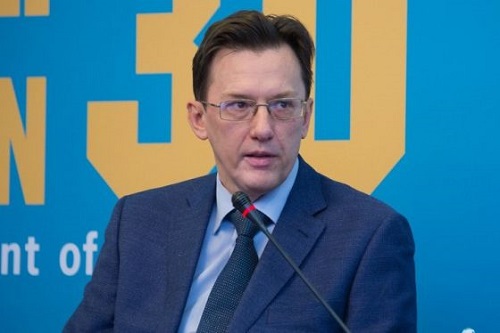
Analysts unanimously recommend that Kazakhstanis tighten their belts even more, since the domestic economy is not going to emerge from a semi-crisis state in the foreseeable future. We talk with Vyacheslav Dodonov, chief researcher at the Institute of Philosophy, Political Science and Religious Studies of the Kazakh National Research University, about why each new year turns out to be worse than the previous ones and how this affects the population's income.
- Vyacheslav Yuryevich, exactly a year ago you shared your forecasts for 2024 with our readers. Which of them came true?
- Last year's forecast can be considered quite accurate. Thus, the devaluation of the tenge amounted to more than 10%, although at that time it was not expected at such a level by either the government (the average annual rate was predicted to be around 460 tenge per dollar), or the IMF (468), or the main part of the expert community (AFK predicted growth to 489). Let me remind you that at the beginning of the year the dollar cost 455 tenge, and the current rate is 525 tenge, which means growth of 15%.
The predicted oil price of about 75 dollars for the Brent grade also turned out to be about the same (the average annual price, according to data for mid-December, is about 80 dollars). GDP growth will be slightly more than the predicted 3-4%. In addition, no particularly significant events occurred that could be characterized as "black swans".
- If we sum up the results of the outgoing year, what are the most significant positive and negative events that you would note?
- Positive events include the continued accelerated development of the manufacturing industry against the backdrop of the opening of new industries. It is growing faster than GDP, although this lead is not very significant. Compared to 2022 and 2023, a slowdown in inflation and its return to single-digit indicators can also be considered a positive phenomenon. However, this success is also relative - it was local and short-lived. Firstly, inflation did not fall below 8%, which is a lot, and secondly, at the end of the year it will also accelerate following the acceleration of the devaluation of the tenge.
As for the list of negative events, the problems of the republican budget, at which level the crisis actually began, are confidently leading. This year, there was a reduction in tax revenues to the budget, and so strong that they not only did not reach the planned indicators, but were also below last year's level for most of the year (it is possible that this situation will persist at the end of 2024). Previously, such a situation was observed only in the 1990s and in 2009, when the global financial crisis occurred. These problems are the reason for the significant overspending of the National Fund due to an additional targeted transfer of 2 trillion tenge, the decision on which was made in October.
- What are the main causes of these problems?
- Among other things, they are caused by the continuing rapid growth of government debt and the costs of servicing it, which can also be noted among the negative aspects of the outgoing year.
The costs of servicing the debt in the budget are set at 2.1 trillion tenge, and most likely they will be higher, since by the end of 10 months they have already amounted to 2.055 trillion. The government debt itself in the third quarter reached almost 29 trillion tenge, having increased by 3.6 trillion over the year. In dollar terms, it is now also at another record high of 60.1 billion dollars. This amount is almost equal to the volume of the National Fund (by the end of the year, the debt will most likely be higher than the assets of the NF), which can also be regarded as a very alarming indicator of the state of public finances and the economy as a whole.
Well, and, concluding the topic of the budget and the economy, it is worth noting the extremely unpleasant fact that with a significant shortfall in the main taxes - corporate income tax (for which by October there was a decrease in revenues compared to last year by 5.4%) and VAT (a decrease of 10.7%) - statistics show us a fairly intensive growth of GDP by 4.1% over nine months. How this is possible with a sharp decrease in taxes paid precisely from those indicators that form the GDP remains a mystery. That is, this year, the list of negatives can also include questions that have arisen regarding the correctness of macroeconomic statistics.
- What serious challenges await Kazakhstan ahead, and most importantly - where will they come from?
- Next year, we can expect negativity both from within and from without. Internal problems will be a continuation of the phenomena noted above - in the sphere of public finances. With a growing state debt and a deficit in the republican budget, there will be a reduction in the National Fund. The state has fewer and fewer opportunities to pursue a stimulating policy at the expense of budget expenditures and increase the population's income.
At the same time, one can expect a reduction in revenues to the same National Fund - this is already in the line of external negativity. A change of administration in the United States can have a negative impact on world oil prices and, possibly, on financial markets (due to another round of trade wars with the whole world, which Donald Trump will start). The first means that the National Fund will receive less tax revenues from enterprises in the raw materials sector, and the second means that it will receive less investment income on its assets. And this is a very unfavorable situation in the context of large transfers to the budget, which will most likely lead to a reduction in the volume of the fund next year.
One of the ways to solve the growing problems in this area is further devaluation, which allows for more tenge to be received in the budget with less foreign currency expenditure. Therefore, we can expect a continuation of the decline in its rate, which began in November.
- Experts often talk about a crisis in the Kazakh economy, but it is not entirely clear - has it arrived or is it approaching? If the latter, do you think it could happen in 2025, and why?
- I do not think it is right to talk about an economic crisis now - statistics do not confirm this. Although, as I said above, there are very big questions about it. As a rule, a crisis has specific and measurable aspects: a decrease in GDP, and a strong one - by several percent or more; a sharp drop in the population's income; high inflation measured in tens of percent; a strong reduction in production in the main sectors of the economy. There is none of this. But there are very serious problems in certain areas, primarily in the budget, which allow us to talk about a crisis. But so far these are fragmentary crisis phenomena, and not an economic crisis as a whole.
In 2025, I do not see the prerequisites for a full-fledged economic crisis, but we can predict the continuation of the gradual degradation of the situation in some areas (the same public finances), and its deterioration in a number of important industries. Thus, with a very likely decrease in world prices for raw materials, we can expect a reduction in production in the mining industry, which this year also showed a symbolic growth of about 1%. The fall in real incomes of the population due to increasing inflation (which will probably again become double-digit) and less intensive growth of budget expenditures will cause a slowdown in trade - the largest type of economic activity in Kazakhstan.
These and other factors will lead to a slowdown in economic growth, which, I believe, will amount to 2-3% in 2025.
- What should ordinary citizens be prepared for: what will happen to the tenge, the real estate market, prices for food and essential goods?
- The tenge will most likely continue to decline, which may amount to 15-20% over the year. At the same time, it is possible that this decline will occur unevenly, in leaps and bounds, timed to some external factors that will justify it - the depreciation of the ruble, the fall in the cost of oil, a crisis in the world or in individual countries, trade wars, etc. This will cause an acceleration of inflation, which will begin to occur from the beginning of the year (with the devaluation that began in November-December) and on average over the year could amount to around 12-14%.
Together, the acceleration of inflation and the decline in the tenge will result in the preservation of the high base rate of the National Bank and, possibly, its further increase. Real estate prices also have the potential to grow, since they will again be affected by inflationary factors and the national currency rate, but this growth will be restrained by a decrease in real incomes of the population, an increase in money market rates and a reduction in the volume of preferential mortgages.
Сауле Исабаева.
https://spik.kz/2102-krizisa-net-no-vy-derzhites-k-chemu-gotovitsja-kazahstancam-v-2025-m.html