Institute of Philosophy, Political Science and Religious Studies

Institute of Philosophy, Political Science and Religious Studies

Institute of Philosophy, Political Science and Religious Studies

Institute of Philosophy, Political Science and Religious Studies

INTERNATIONAL SCIENTIFIC AND PRACTICAL CONFERENCE
09.09.2026
INTERNATIONAL SCIENTIFIC AND PRACTICAL CONFERENCE
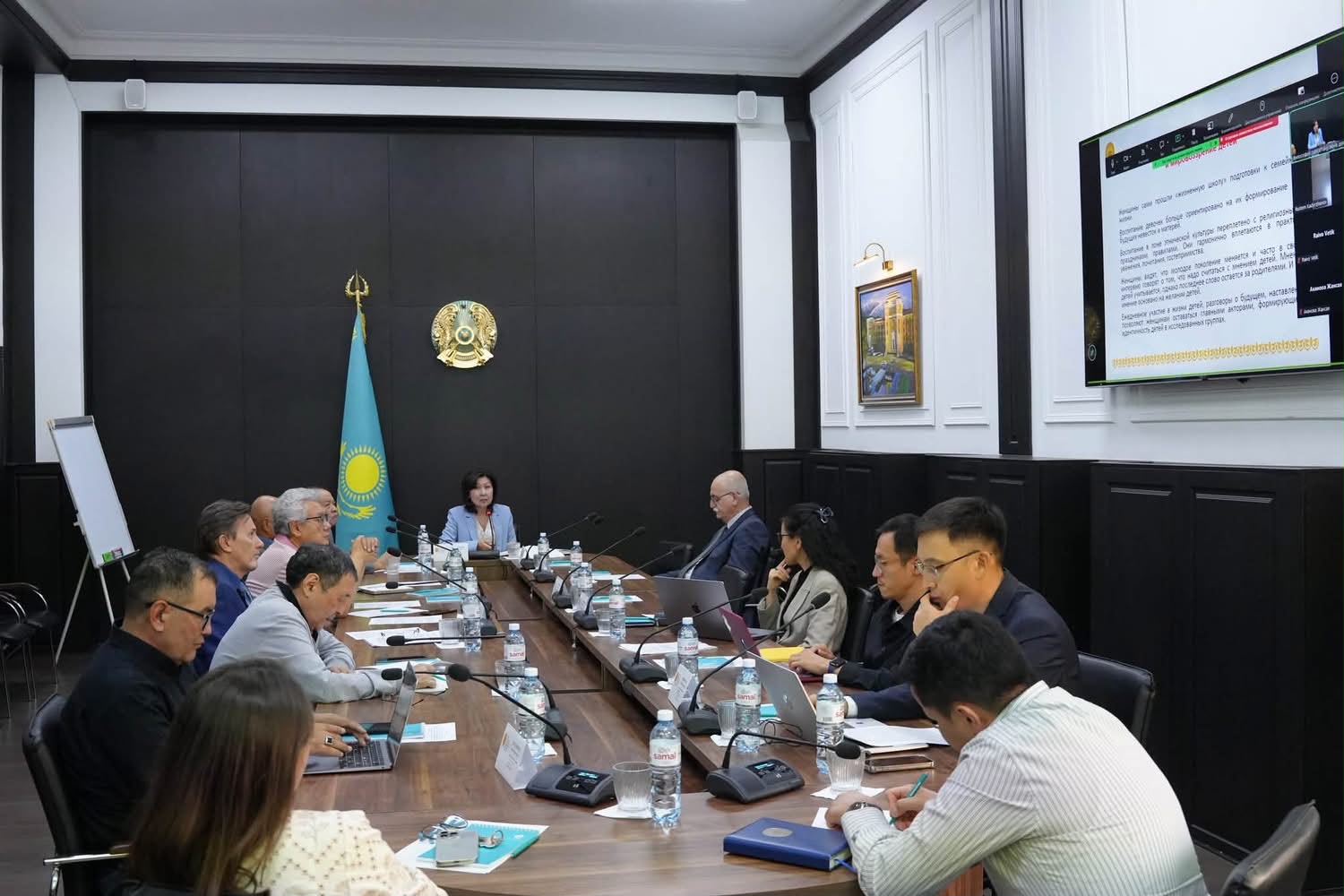
On September 9, 2026, the Institute of Philosophy, Political Science and Religious Studies hosted the International Scientific and Practical Conference “Communicative Practices of Ethnic Groups in Southern Kazakhstan: Challenges and Prospects.”

The conference brought together Kazakhstani and international scholars, researchers, experts, and specialists in interethnic relations, political science, sociology, philosophy, and religious studies. The event was held in both offline and online formats, bringing together participants from Kazakhstan and other countries.

▫️ The conference was opened by Aigul Sadvokassova, Director General of the Institute. In her presentation, “Women in Ethnic Communities of Southern Kazakhstan: Identity and Everyday Life,” she presented the findings of a study on the role of women in preserving and transforming ethno-cultural identity, as well as the everyday practices of ethnic communities in the southern regions of Kazakhstan.

▫️ The conference was moderated by Mukhtarbek Shaikemeliev, Chief Research Fellow at the Institute of Philosophy, Political Science and Religious Studies, who presented the results of the research project “Monitoring Interethnic Relations in the Southern Regions of Kazakhstan” for 2024–2026.

The first part of the conference focused on the relationship between socio-economic processes and the state of interethnic relations.

▫️ Vyacheslav Dodonov, Chief Research Fellow at the Institute, examined the relationship between interethnic conflicts and the socio-economic situation, focusing on the southern regions of Kazakhstan.

▫️ The international dimension of the topic was presented by Raivo Vetik, Professor of Comparative Politics at Tallinn University (Estonia), with his paper “National Integration under the Shadow of War: Explaining Estonia’s ‘Dead Circle’ of Mutual Fears.” His presentation focused on national integration, societal fears, and factors influencing social cohesion in the context of contemporary challenges.

The second part of the conference continued with discussions on identity formation and representation, regional policy, and contemporary communicative practices.

▫️ Particular attention was given to the relationship between religion and nation-building. Damira Sikhimbaeva, Senior Research Fellow at the Institute, presented a study of the integration and disintegration trends associated with Islamization in the context of nation-building in Kazakhstan.

▫️ Andrzej Wierzbicki, Professor and Head of the Department of Oriental Studies at the University of Warsaw (Poland), Doctor of Political Science, addressed the origins of nations, national identity, and processes of nation-building.

▫️ Fabio De Leonardis, Professor at Shanghai International Studies University, presented a paper on the patrimonialization of Italian and Apulian identity through an olive oil brand. The case of regional branding demonstrated how cultural heritage and local identity become part of contemporary social and communicative practices.

▫️ Malkhaz Matsaberidze, Professor at the Institute of Political Science of Tbilisi State University and Doctor of Political Science (Georgia), examined Georgia’s policy towards the peoples of the North Caucasus.

▫️ A significant part of the discussion focused on hate speech as one of the most sensitive aspects of contemporary interethnic communication. Nurken Aitymbetov, Leading Research Fellow at the Institute, presented the results of a sociological study conducted in 2026 across four regions of Kazakhstan, focusing on manifestations of hate speech in the sphere of ethno-social relations.

▫️ This topic was further explored by Sholpan Bolganbayeva, Senior Lecturer at Shymkent University and Master of Social Sciences, who presented the findings of the sociological study “Hate Speech as a Socio-Cultural Problem,” conducted in the city of Shymkent and Turkestan Region.

The presentations were followed by discussions and an open exchange of views. Participants examined the state of interethnic relations in Kazakhstan’s regions, the impact of socio-economic and religious processes, transformations of identity, contemporary communicative practices, and the spread of hate speech in the information environment.

At the conclusion of the conference, participants emphasized the importance of systematic research into interethnic relations and the development of scientific monitoring, as well as the expansion of international and interdisciplinary cooperation. Particular attention was given to strengthening constructive dialogue among representatives of different ethnic communities, improving communicative practices, and fostering a culture of mutual respect.